




Professional
For kids

For kids and teens

Online group lessons for children aged 7 and up and for teens in small, cozy groups.

What we offer

We invite children from seven years old and teenagers to group online English lessons in small, cosy groups (up to 5 children). Groups are formed taking into account each child’s age and level. Lessons run in a maximally interactive format, where the main focus is placed precisely on speaking.

Individual approach

Groups are formed taking into account each child’s age and level.

Maximum practice

Lessons run in an interactive format, where the main focus is placed precisely on speaking.

Convenient schedule

Lessons take place twice a week, usually in the afternoon. Lesson duration is 60 min (children’s groups) and 80 min (teen groups).

Dedicated lessons for successful preparation

A separate group runs for NMT preparation. Contact our manager for details.

Advantages

Which textbooks do we use?

We use textbooks only from international publishers, such as: Pearson, Oxford University Press, Cambridge University Press, which meet international quality standards. But our creative teachers constantly enrich lessons with their own materials and engaging games.
Publishers
  • Pearson
  • Oxford University Press
  • Cambridge University Press

How do we keep kids motivated to learn?

Yes, children and teenagers don’t always realise the importance of learning English. But that is exactly where the teachers’ skill comes in — to spark the children’s interest by offering relevant and modern topics for discussion. We also use captivating interactive resources, such as Wordwall, Baamboozle, Quizizz, Kahoot and so on, and we draw on different types of interaction: pair work, group work, active movement activities. Children never get bored when everyone is always involved in the work.

In addition, we believe that a teacher is not only a source of knowledge but, above all, a guide, anchor and support for students. That is exactly why we do everything to create a friendly atmosphere and to match students into groups so that everyone feels comfortable working together.

Interactive resources
  • Wordwall
  • Baamboozle
  • Quizizz
  • Kahoot

How long does it take to master a level?

Everything is individual: it depends on the child’s starting level. On average, mastering one level takes from 8–10 months. If it is a higher level in teen groups, B1/B1+, then it can take from 1 to 1.5 years. At the end of the school year we hold mock-up Cambridge tests Starters, Movers, Flyers and PET to confirm the level.

  • Starters
  • Movers
  • Flyers
  • PET

Meet our teachers

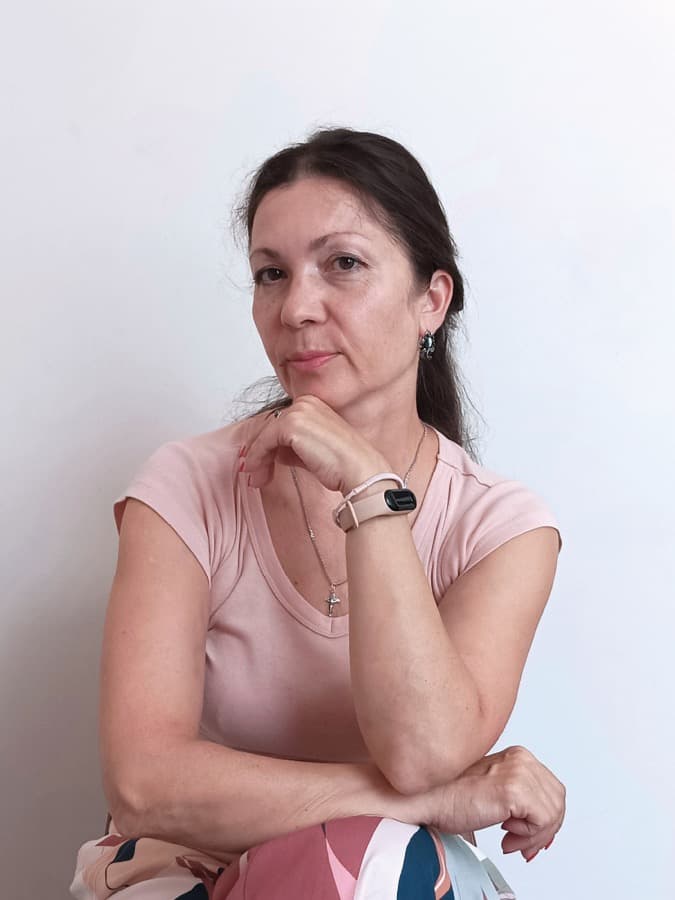
Valeriia Sokolova

Valeriia Sokolova

Teacher of children’s and teenage groups

Teaching experience: 10 years

Holds Master’s degrees in English Language Teaching and in Practical Psychology. Graduated with honours from the Kharkiv Humanitarian-Pedagogical Academy (2020). A regular participant in professional conferences, workshops, seminars, courses and trainings. Hobbies: cooking, travel and self-improvement.

A good teacher can inspire hope, ignite the imagination and instil a love of learning.

Brad Henry
Olha Lisovyk

Olha Lisovyk

Teacher of children’s and teenage groups

Teaching experience: 5 years

A graduate of the Faculty of Foreign Languages at V. N. Karazin Kharkiv National University (2021). Hobbies: literature, travel, cycling and learning foreign languages.

Live as if you were to die tomorrow. Learn as if you were to live forever.

Mahatma Gandhi

Parent reviews

Mariana Spivak

At the start of the school year I wanted to leave a review about the English course at the Professional school — perhaps it will be useful to someone. We are completely satisfied with the courses: an attentive, professional teacher, Valeriia Vitaliivna Sokolova, modern new teaching methods, practice in all kinds of communication (speaking, expressing one's own opinion, writing, listening comprehension of native speakers, grammar), teaching and explaining new material in English itself — and quite quickly, with a slower pace when needed so that the children get used to different speeds of speech, thanks to which they cover a lot in one lesson with no wasted time. Teaching in a small group (up to 5 people), where the teacher tries to give attention to every student and focus on each child's needs.

Regular homework with checking, always complete answers to the children's questions when something is unclear, a friendly yet at the same time working atmosphere. At the end of the year there are final assessments and the teacher's conclusions about the progress made in speaking, along with recommendations on what still needs work. We really liked the recommendations and resources for independent practice over the summer holidays. Communication with the school administrator is also always pleasant. Our personal experience with the Professional school is positive. I recommend it.