First published in
ЖДТУ (Житомирський державний технологічний університет) · October 28, 2016
ЖДТУ (Житомирський державний технологічний університет) · October 28, 2016
This conference paper is about a real classroom experience: since 2013, students in grades 4–7 at the Kharkiv «Professional» lyceum studied English through the Canadian SMRT curriculum (Little Mountain Learning Academy). Instead of covering grammar, vocabulary and listening as separate items, children learned the language around reading engaging texts — and reading itself became the foundation for every other skill.
Olha Oliinyk explains why this approach outperforms the traditional drilling of rules out of context: when a child enjoys reading, they absorb the language naturally, while vocabulary, pronunciation and grammar grow on a solid literacy foundation. The paper draws on methodology research (Law & Eckes, Rutherford, Worthy) and shows that skills learned in isolation yield mostly short-term gains.
For us this is not just theory: the «learning around reading» philosophy still underpins how we work with children and adults at the «Professional» school. The full text of the paper (in English) is below; it was presented at a conference at Zhytomyr State Technological University in 2016.
ЖДТУ (Житомирський державний технологічний університет) · October 28, 2016
The Smrt Youth and Kids curriculum developed by Little Mountain Learning Academy is a dynamic, innovative and progressive program geared towards school aged students learning English as a Foreign Language (EFL). It is a literary-based curriculum that emphasizes language acquisition built around strong reading skills. It allows students to be fully engaged in fun and interesting readings that help them build foundational literacy competencies. With these foundations, students are able to construct strong reading, writing, speaking, listening, vocabulary, and grammar skills.
The purpose of the article is to share the experience of implementing SMRT program in the Kharkiv Private Lyceum “Professional”. This experience can be implemented at the Ukrainian schools. Since 2013 lyceum students of 4th-7th grades have been taking SMRT English classes. Modern world is digital and using programs such as SMRT English teachers can make language learning much more attractive for schoolchildren in the middle school.
One of the key concepts used in the development of this curriculum is that an engaging, fun curriculum is vital in order to help students develop language fluency. It is becoming widely recognised across the field that learning language skills out of context is not effective. In fact, the universality of language allows students to learn English skills whilst exploring topics in the context of other areas of study. This has been shown to be much more effective in developing language fluency.
The Smrt Youth and Kids curriculum aims to allow students to learn English in an enjoyable and engaging environment. Enjoyment of reading and learning is crucial in language acquisition. “An interesting storyline is more important than simple words. It may seem counterintuitive to give a student a book like There’s a Nightmare in My Closet (who needs sight words like nightmare or suppose at this stage?). That is not the point. Enjoyment of reading is essential. Giving students books they can have fun with, that they want to read over and over, is a big part of the game” [1, p.104].
By using multi-media and multi-genre texts in the classroom, teachers are able to engage students in their own learning. When students are interested in their learning topics, they will become fluent much faster [3, p.566].
For curriculum to be effective, engaging and applicable for young learners, it is necessary to adapt the traditional skills-based learning familiar to many EFL teachers. Instead of teaching grammar, vocabulary and listening out of context, the Smrt Youth and Kids curriculum uses reading as the foundation for all learning.
Much research shows that reading is the cornerstone of language acquisition. The face of literacy and reading is also changing. When we refer to texts in the classroom today, we are talking not only of books, but magazines, films, websites, songs, and so on. Today’s literacy involves the understanding and processing of “oral, written, electronic and multi-media forms of communication”.
“There is wide agreement among literacy researchers that students who read more become more proficient in reading fluency and comprehension as well as general vocabulary and cognitive development.” [3, p.568] The Smrt Youth and Kids curriculum builds grammar, vocabulary, speaking, listening and writing skills from firm reading foundations. Without these strong foundations, any grammar or vocabulary lessons learned are in isolation and therefore constitute mostly short-term language acquisition [2, p.22]. In order to help students gain long-term fluency, it is important to keep the focus on literacy and develop all other skills from this base.
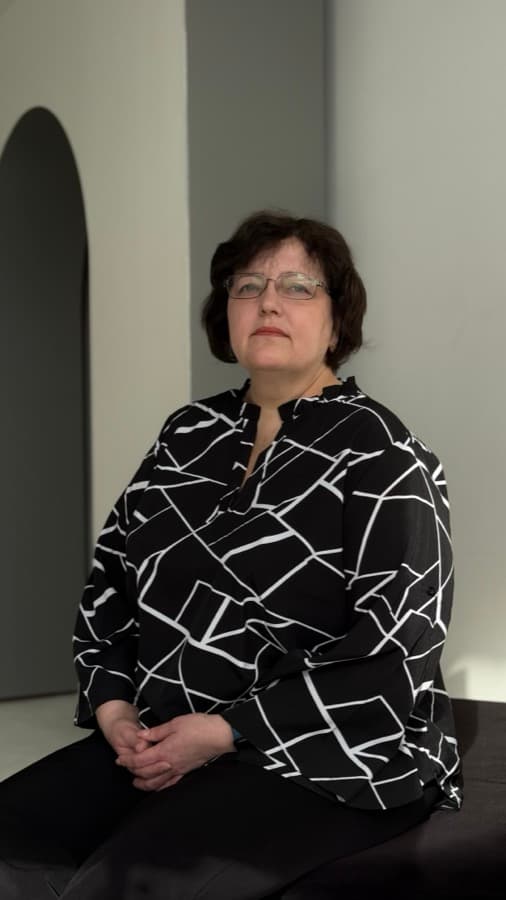
Co-founder of the school, teacher
31years of teaching experience
PhD, holder of the top global certificates CELTA and TESOL, graduate of prestigious US programmes (Universities of Arizona, Oregon, George Mason), a certified trainer of the US Embassy and a speaker at the international TESOL and IATEFL conferences.