How the lessons go
- 11 lesson = 1 topic + practice
- 2We explain through typical mistakes — the ones you actually make
- 3Pick the group for your level and work at a comfortable pace
We dedicate a whole month to grammar — the kind that keeps raising questions year after year. No cramming or dry rules: logic, understanding and plenty of practice. Pick the group for your level — A2, B1 or B2 — and in 10 lessons sort out exactly your topics.
All three groups start at the same time. Pick your level.
tenses, questions, much / many / few / a few
You have the basics but get lost in tenses and core structures.
Present Perfect, comparatives, reported speech
You speak confidently but want to finally put your grammar in order.
conditionals, complex tense constructions, modal verbs, reported speech
You speak fluently and polish the hard parts — conditionals, tense constructions, nuance.
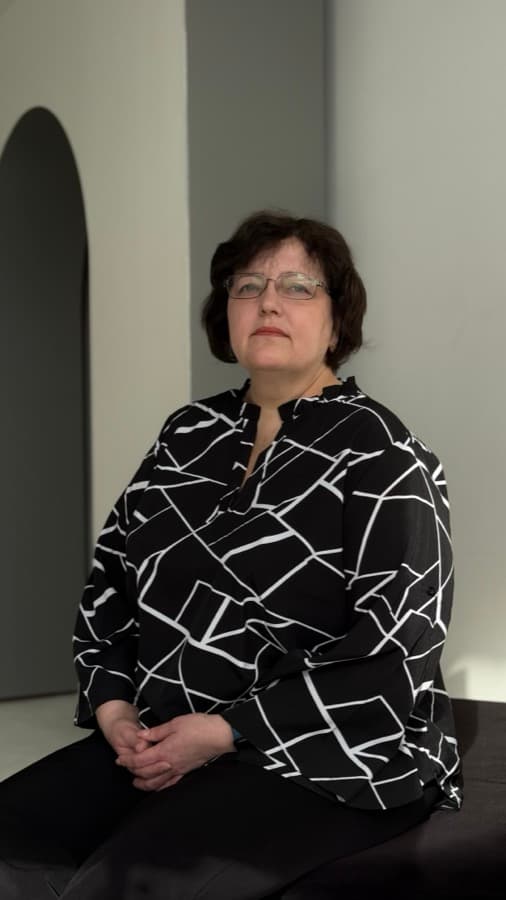
Co-founder of the school, teacher
Learn from those who teach the best! The blend of a deep Ukrainian academic school and global experience makes this course truly unique.
31years of teaching experience
PhD, holder of the top global certificates CELTA and TESOL, graduate of prestigious US programmes (Universities of Arizona, Oregon, George Mason), a certified trainer of the US Embassy and a speaker at the international TESOL and IATEFL conferences.
You’ll stop making backshift mistakes and report others’ words, questions and commands naturally (useful for business correspondence and retelling).
You’ll express degrees of certainty: from must have done to might have done, in the present and the past.
You’ll speak fluently about unreal situations and an alternative past (“if I had known, I’d have acted differently”) and give abstract advice.
You’ll master the passive voice and the causative: talk correctly about services (“I had my car repaired”, not “I did it myself”).
You’ll tell past habits (used to do) from getting used to new conditions (be / get used to doing) without mistakes.
These topics are the must-have core of grammar for high scores in IELTS, FCE or TOEFL.
The key change: instead of translating internally from Ukrainian, you’ll speak in complex structures automatically.